
Process Safety Management (PSM) is one of the most comprehensive regulatory frameworks affecting high-hazard industries in the United States.
Most EHS and Process Safety professionals are familiar with the standard. They know there are 14 elements. They know OSHA inspections often focus on documentation. They know gaps can lead to citations, operational risk, and repeat findings.
The challenge is not understanding the regulation. The challenge is maintaining audit-ready documentation across all 14 elements year after year.
This is where many organizations struggle with OSHA PSM compliance.
Rather than reviewing the regulation line by line, this guide focuses on what OSHA expects in practice, where documentation commonly breaks down, and how PSM software can help organizations maintain compliance.
What Is OSHA Process Safety Management?
OSHA’s Process Safety Management standard (29 CFR 1910.119) applies to facilities that handle specified quantities of highly hazardous chemicals.
The standard is designed to prevent catastrophic releases that could result in fires, explosions, toxic exposures, environmental damage, or fatalities.
The full regulation can be found on OSHA’s website:
https://www.osha.gov/laws-regs/regulations/standardnumber/1910/1910.119
While the requirements are extensive, most compliance challenges come down to one recurring issue: Documentation.
Organizations often perform the work but struggle to demonstrate it consistently during audits, inspections, and compliance reviews.
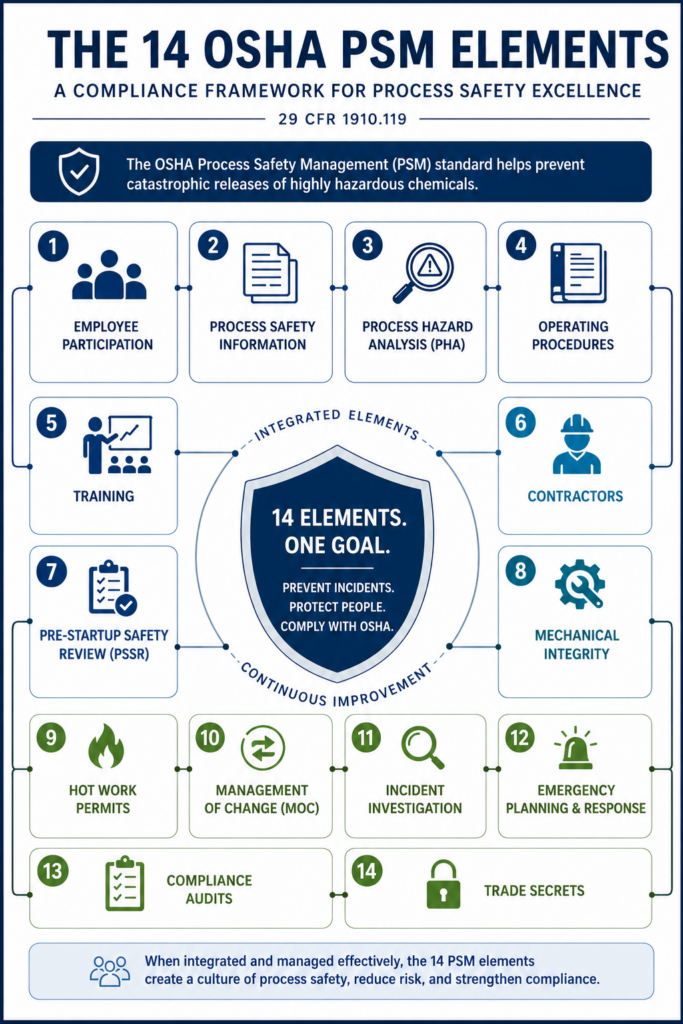
The 14 PSM Elements: A Practical Compliance Checklist
1. Employee Participation
OSHA requires employees to participate in the development and implementation of PSM programs. Common documentation gaps include:
- Missing participation records
- Outdated employee involvement plans
- Limited evidence of consultation activities
2. Process Safety Information (PSI)
PSI forms the foundation of the PSM program. Organizations must maintain information related to:
- Chemical hazards
- Process technology
- Equipment design
- Safe operating limits
Common issues include outdated P&IDs, missing equipment documentation, and inconsistent record control.
3. Process Hazard Analysis (PHA)
PHAs identify and evaluate process hazards.Common documentation failures include:
- Overdue revalidations
- Untracked recommendations
- Missing action closure evidence
Organizations often improve visibility by connecting PHA recommendations directly to corrective action workflows and Risk Assessment Management systems.
4. Operating Procedures
Operating procedures must be current, accurate, and accessible. Common findings include:
- Procedures not updated after process changes
- Inconsistent revision control
- Missing approval records
5. Training
Organizations must ensure employees understand operating procedures and hazards.Documentation challenges often include:
- Incomplete training records
- Missing refresher training evidence
- Difficulty demonstrating competency verification
6. Contractors
Facilities must evaluate contractor safety performance and communicate applicable hazards. Common gaps include:
- Contractor qualification records
- Safety orientation documentation
- Performance evaluations
7. Pre-Startup Safety Review (PSSR)
Before introducing hazardous materials into new or modified systems, organizations must verify readiness. Common audit findings include:
- Missing PSSR checklists
- Incomplete approvals
- Lack of documented action closure
8. Mechanical Integrity
Mechanical Integrity programs help ensure equipment performs safely throughout its lifecycle. Documentation often becomes fragmented across:
- Inspection systems
- Maintenance records
- Reliability databases
- Engineering files
Common issues include overdue inspections and incomplete documentation trails.
9. Hot Work Permits
Facilities must control hot work activities in covered process areas. Common gaps include:
- Missing permit records
- Inconsistent retention practices
- Incomplete approvals
10. Management of Change (MOC)
Management of Change is one of the most frequently cited areas of weakness within PSM programs. Changes involving equipment, procedures, chemicals, technology, or operating limits require formal review and approval. Common documentation failures include:
- Unapproved changes
- Incomplete risk reviews
- Missing training documentation
- Open action items
Organizations often improve compliance by implementing dedicated Management of Change software.
11. Incident Investigation
Incidents and near misses must be investigated promptly. The investigation itself is only part of the requirement. Organizations must also demonstrate:
- Findings were documented
- Recommendations were assigned
- Corrective actions were completed
One of the most common audit findings is the inability to prove closure of investigation recommendations. Dedicated Incident Investigation Management systems help maintain a complete audit trail.
12. Emergency Planning and Response
Facilities must prepare for potential emergency situations. Documentation should include:
- Response procedures
- Training records
- Drill results
- Coordination activities
13. Compliance Audits
OSHA requires PSM compliance audits at least every three years. The audit itself is not enough. Organizations must track findings, assign responsibilities, and verify closure. Many recurring findings occur because recommendations from previous audits remain unresolved.
Dedicated Audit Management systems can help organizations maintain visibility across all audit-generated actions.
14. Trade Secrets
Trade secret protections cannot prevent employees and contractors from accessing information necessary to comply with PSM requirements. Organizations should maintain clear procedures for managing protected information while supporting compliance obligations.
Where OSHA PSM Compliance Typically Breaks Down
Most organizations do not fail because they lack procedures.
They struggle because documentation becomes disconnected across multiple systems.
Typical examples include:
- PHA recommendations tracked in spreadsheets
- MOC reviews stored in email chains
- Incident investigations managed separately
- Audit findings maintained in disconnected databases
- Corrective actions spread across departments
As a result, documentation becomes difficult to locate, verify, and defend during inspections.
How PSM Software Supports Compliance
Effective PSM software does not replace the regulation or make compliance automatic.
Instead, it helps organizations manage documentation, workflows, approvals, and corrective actions consistently across PSM programs.
Benefits often include:
- Centralized records
- Action item tracking
- Workflow management
- Audit readiness
- Document control
- Traceable approvals
- Compliance reporting
Most importantly, software helps maintain visibility across multiple PSM elements rather than treating each requirement as a separate compliance activity.
Building an Audit-Ready PSM Program
Successful OSHA PSM compliance depends on more than policies and procedures.
Organizations need systems that support documentation, accountability, and continuous follow-up across all 14 elements.
When recommendations, actions, approvals, and records are managed consistently, audits become easier, inspections become less disruptive, and compliance programs become more sustainable.
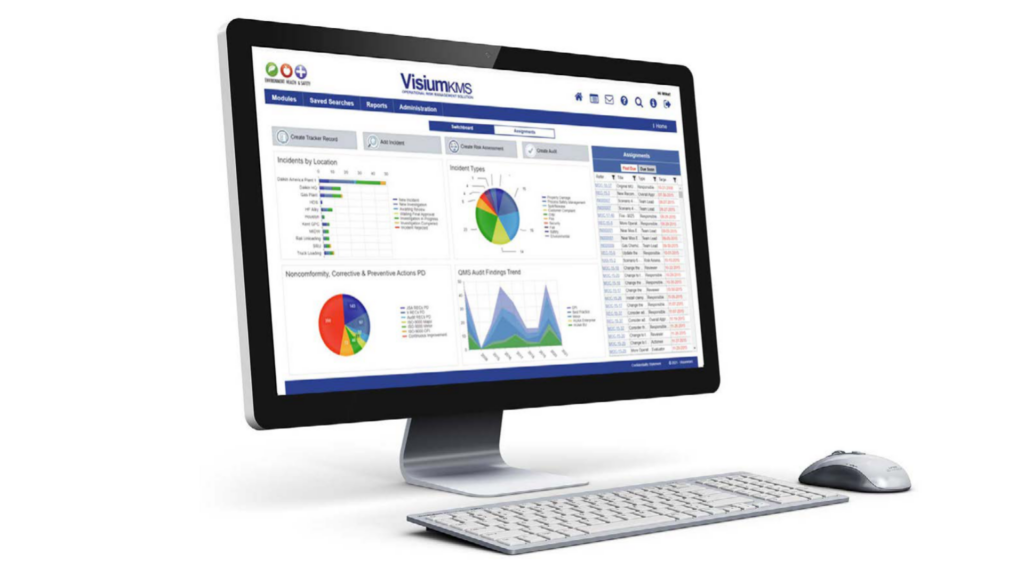
VisiumKMS provides integrated modules for Management of Change, Incident Investigation, Risk Assessment, Audits, and corrective action tracking to help organizations maintain audit-ready documentation across their PSM programs.
Explore the complete VisiumKMS module suite and see how to streamline your compliance.